Electrohypersensitivity (EHS)
An evidence-based overview of a complex environmental condition, its biological markers, and effective management strategies.
What is EHS?
Electrohypersensitivity is a recognized condition where individuals experience a wide range of adverse symptoms in response to man-made electromagnetic fields (EMFs) at levels far below established safety limits. Once dismissed, it is now gaining legal and medical recognition as a legitimate, disabling neuropathological disorder.
The condition is characterized by a diverse symptomatic profile, suggesting a multi-systemic biological dysregulation rather than a localized issue.
A Spectrum of Reported Symptoms
EHS presents a diverse range of complaints, with neurological and systemic symptoms being the most prominent.
The Science Behind the Sensitivity
Mounting evidence points to a clear biological cascade, moving EHS from a "medically unexplained" condition to one with identifiable pathophysiological mechanisms.
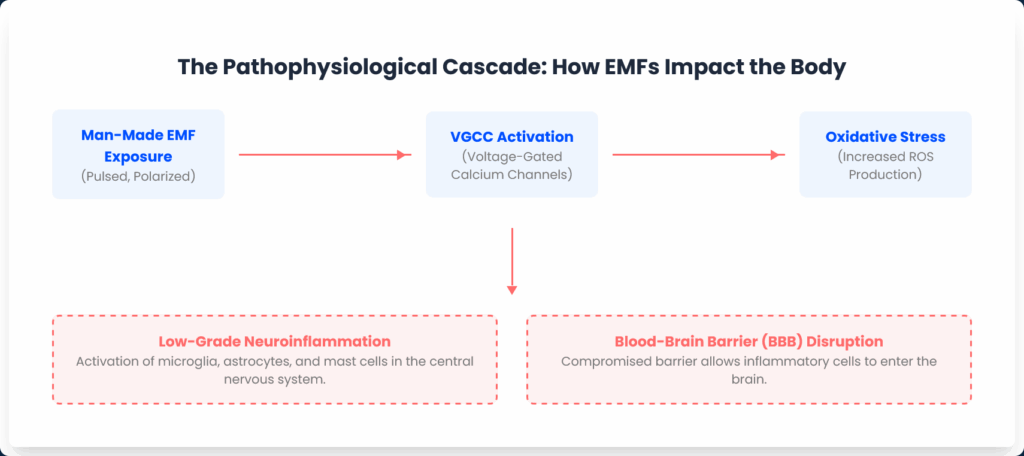
The Pathophysiological Cascade: How EMFs Impact the Body
Man-Made EMF Exposure
(Pulsed, Polarized)
VGCC Activation
(Voltage-Gated Calcium Channels)
Oxidative Stress
(Increased ROS Production)
Low-Grade Neuroinflammation
Activation of microglia, astrocytes, and mast cells in the central nervous system.
Blood-Brain Barrier (BBB) Disruption
Compromised barrier allows inflammatory cells to enter the brain.
Genetic Predisposition
Specific variations in detoxification pathway genes (e.g., GSTT1, GSTM1) can increase EHS risk by nearly 10-fold.
Inflammatory Markers
Elevated levels of Histamine (2-10x higher) and Heat Shock Proteins (HSP) indicate chronic, low-grade inflammation.
BBB Disruption Markers
Increased Protein S100B and Nitrotyrosine in the blood confirm a compromised blood-brain barrier.
Altered Melatonin
A notable decrease in the excretion of 6-hydroxymelatonin sulfate is found in ~90% of EHS cases, impacting sleep and antioxidant defense.
Autoimmunity
Anti-myelin autoantibodies are detected in ~15% of cases, suggesting the immune system may attack nerve sheathings.
Heart Rate Variability
EMF exposure can alter HRV, indicating a physiological stress response and a disturbed circadian rhythm.
A Multi-Faceted Management Approach
Primary Strategy: EMF Exposure Reduction
The cornerstone of EHS management is avoidance. Reducing exposure to man-made EMFs is the most effective strategy for alleviating symptoms. This involves adopting "Safe Tech" practices.
- 📱Mobile Phones: Use speakerphone or air-tube headsets. Keep in airplane mode when not in use. Avoid carrying on the body.
- 💻Wired Connections: Replace Wi-Fi with wired Ethernet for internet. Disable wireless functions on routers and devices.
- 📞Corded Phones: Swap cordless landlines, which constantly emit radiation, for traditional corded models.
- 💡Smart Devices: Opt-out of wireless smart meters. Choose hardwired alternatives for smart TVs, printers, and other IoT devices.
- 🔌Sleep Hygiene: Unplug all electronics in the bedroom before sleep to create a low-EMF resting environment.
Efficacy of Nutritional Support
Patient surveys show dietary changes and supplements are perceived as highly effective complementary treatments.
Key Supplements:
- Melatonin: Potent antioxidant, combats EMF-induced oxidative stress.
- Glutamine: Supports intestinal barrier integrity and immune function.
- Antioxidants (C, E): Help protect cells from free radical damage.
- B Vitamins: Crucial for neurological function and energy metabolism.

