
Designing Healthy, Radiation-Safe Schools: The New Benchmark in Educational Architecture
The Silent Crisis in Modern Classrooms
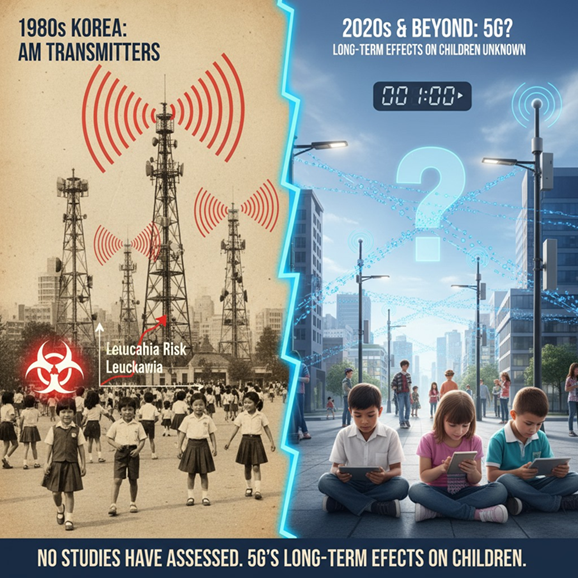
Today’s schools pulse with digital innovation: interactive whiteboards, tablets, Wi-Fi throughout campuses, and 5G towers standing nearby. Yet this hyper-connectivity comes with an invisible cost—Wireless Electromagnetic Radiation (EMR), now recognized by the WHO’s International Agency for Research on Cancer (IARC) as a potential human carcinogen.
Here’s what most school leaders, architects, and parents don’t realize:
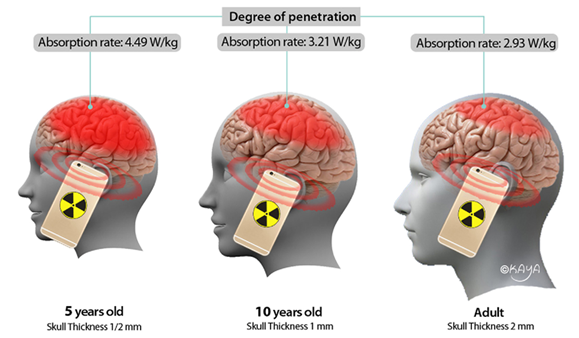
Children absorb 2–10 times more electromagnetic radiation than adults due to thinner skulls, higher brain water content, developing neural systems, and longer lifetime cumulative exposure. Every day your school delays EMR management, students experience unnecessary biological stress that impacts focus, sleep, memory, and long-term health.
This is no longer a “nice-to-have” design consideration—it’s an emerging liability.
For architects, school administrators, and building designers, EMR safety represents both a moral imperative and a competitive advantage in an increasingly health-conscious education market.
Contents
- Why EMR Exposure Is a Critical Concern for Schools.
- The Business Case: Why Schools Are Waking Up.
- For Architects & Designers: EMR-Safe Design Principles That Strengthen Your Craft
- For School Leaders: Operational Policies That Transform Learning Outcomes.
- ASD-Friendly Classrooms: Designing Low-EMR Sensory Environments.
- The Critical First Step: A Professional EMR Exposure Audit
- Why Partner with LiveSAFE: End-to-End EMR-Safe School Certification.
- Implementation Roadmap: Quick Start for Your School
- The Business Case: What Schools Gain from EMR-Safe Certification.
- FAQ: Common Questions from Architects, School Leaders & Parents.
- The Future of School Design: EMR-Safety as Standard Practice.
- Build the Future of Healthy Schools.
- References
- Why EMR Exposure Is a Critical Concern for Schools.
- The Biology: Why Children Are Uniquely Vulnerable.
- Key vulnerability factors:
- The Science: Documented Health Impacts.
- The Business Case: Why Schools Are Waking Up.
- In contrast, EMR-safe schools enjoy:
- For Architects & Designers: EMR-Safe Design Principles That Strengthen Your Craft
- The Architectural Imperative.
- Principle 1: Smart Site Selection & Building Orientation.
- Principle 2: Architectural Shielding (Walls, Windows & Ceilings).
- Principle 3: Electrical System Design – The “Dirty Electricity” Factor.
- Principle 4: Biophilic + Low-EMR Design Integration.
- For School Leaders: Operational Policies That Transform Learning Outcomes.
- No-CAPEX, High-Impact Policy Framework.
- Policy 1: Wired-First Connectivity.
- Policy 2: Digital Hygiene & Device Management
- Policy 3: Student & Parent Digital Wellness Education.
- ASD-Friendly Classrooms: Designing Low-EMR Sensory Environments.
- Why ASD Students Benefit Most from EMR Reduction.
- Architectural Features for ASD-Inclusive, Low-EMR Zones.
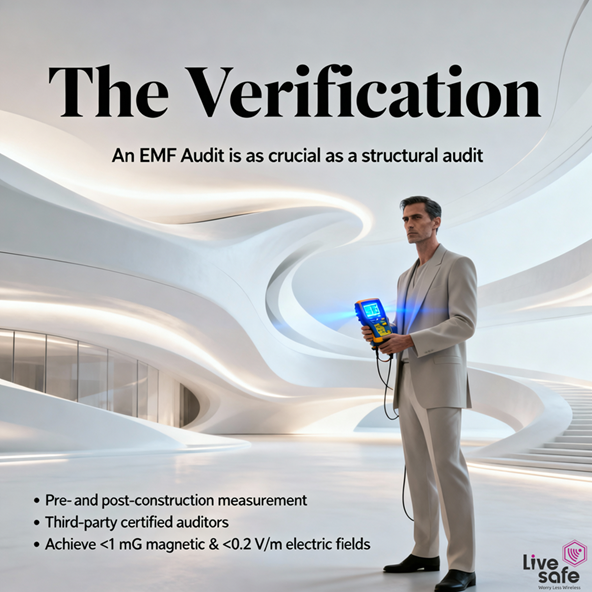
- The Critical First Step: A Professional EMR Exposure Audit
- Why Every School Needs an Audit
- Cost & Timeline.
- What Schools Discover.
- Why Partner with LiveSAFE: End-to-End EMR-Safe School Certification.
- LiveSAFE’s Proven Approach.
- Documented Track Record.
- Implementation Roadmap: Quick Start for Your School
- For New Construction (Optimal Impact).
- For Existing Schools (Retrofit & Phase-In).
- The Business Case: What Schools Gain from EMR-Safe Certification.
- Health & Safety.
- Academic Performance.
- Inclusive Education.
- Brand & Enrollment
- Cost Avoidance.
- FAQ: Common Questions from Architects, School Leaders & Parents.
- The Future of School Design: EMR-Safety as Standard Practice.
- Build the Future of Healthy Schools.
- References
Why EMR Exposure Is a Critical Concern for Schools
The Biology: Why Children Are Uniquely Vulnerable
Unlike air quality or water contamination—visible problems architects have long addressed—EMR is invisible, pervasive, and cumulative. A 5-year-old’s skull measures just 0.5 mm thick (compared to an adult’s 2 mm), allowing electromagnetic waves to penetrate deeper into developing brain tissue.
Key vulnerability factors:
- Thin cranial structure – Greater radiation penetration
- Higher water content in brain tissue – Enhanced absorption (dielectric effect)
- Smaller head diameter – Concentrated “hot spots” of energy absorption
- Early and frequent exposure – Lifetime accumulation starting from infancy
- Inadequate safety standards – Current SAR testing uses adult models (1989 U.S. military recruit data), not children
The Science: Documented Health Impacts
Peer-reviewed research increasingly links EMR exposure to:
Neurological & Cognitive Effects:
- Reduced figural memory (ability to convert short-term to long-term learning)
- Decreased concentration and focus capacity
- Impaired working memory critical for problem-solving
- Altered brain development patterns in prenatal/early exposure
Cellular & Genetic Impacts:
- Oxidative stress (free radical generation)
- DNA damage and epigenetic changes
- Increased vulnerability to chronic disease risk
Behavioral & Sleep Disruptions:
- Melatonin suppression from EMR + blue light exposure
- Sleep quality deterioration
- Increased anxiety, restlessness, and ADHD-like symptoms
- Emotional dysregulation (a growing concern in schools)
Special Concern – Autism Spectrum Disorders (ASD):
Children with ASD exhibit heightened neurophysiological sensitivity to EMR. The biological mechanisms of EMR exposure (oxidative stress, neuroinflammation, mitochondrial dysfunction) align closely with ASD pathophysiology, suggesting that EMR reduction yields amplified benefits for neurodiverse students.

Why Schools Are Waking Up
Progressive schools, particularly in India’s metro areas and premium segments, face mounting parent expectations around holistic child health. Schools that ignore EMR are increasingly vulnerable to:
- Health & liability claims – As EMR regulation tightens globally, schools without documented mitigation face legal exposure
- Enrollment pressure – Parents actively seek “health-first” institutions
- Staff recruitment challenges – Educators expect safe working environments
- Accreditation gaps – WELL and LEED standards increasingly recognize EMF management
In contrast, EMR-safe schools enjoy:
- Premium positioning (“Certified EMR-Safe Campus”)
- Higher parent satisfaction and enrollment stability
- Improved academic performance (directly correlated with reduced EMR exposure)
- Better special needs inclusion (especially for ASD students)
- Competitive advantage in parent testimonials and word-of-mouth
For Architects & Designers: EMR-Safe Design Principles That Strengthen Your Craft
The Architectural Imperative
As architects, you’re already championing air quality, water systems, acoustics, and sustainable materials. EMR management is the natural next frontier—and one that differentiates your schools in an increasingly crowded market.
The good news: EMR-safe design isn’t a constraint—it’s an integrated design opportunity that enhances both form and function.
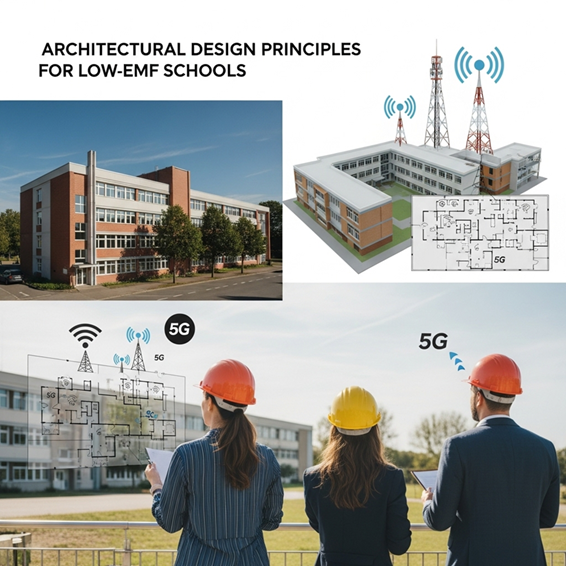
Principle 1: Smart Site Selection & Building Orientation
Before breaking ground:
- Assess tower proximity – Identify cell towers, electrical substations, and high-voltage transmission lines within a 500-meter radius. Request updated RF mapping from local telecom operators.
- Orient classrooms strategically – Position classroom blocks to minimize direct radiation exposure from external sources. Admin blocks or storage can serve as natural barriers.
- Acoustic + EMR synergy – The same mass and orientation principles that reduce noise also attenuate EMR.
Design tip: In India’s urban context (where tower density is high), early site assessment with LiveSAFE’s EMR mapping tools can save ₹50+ lakhs in future retrofitting costs.
Principle 2: Architectural Shielding (Walls, Windows & Ceilings)
Modern EMR-reduction materials are architecturally neutral—they don’t compromise aesthetics or structural integrity.
LiveSAFE Shielding Solutions:
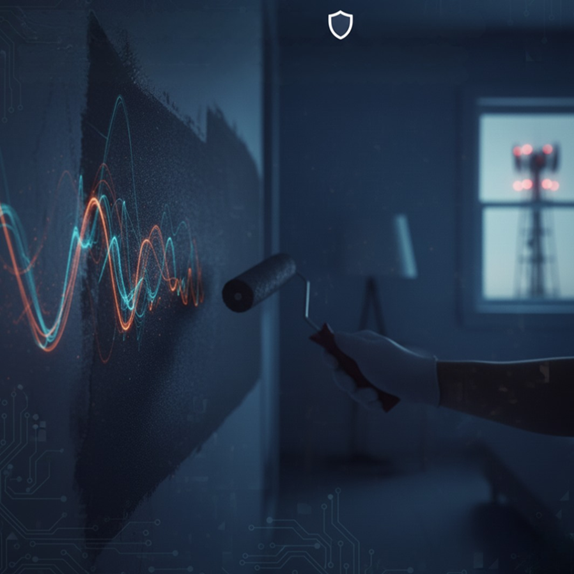
EMR-Reducing Coatings
- Water-based, non-toxic acrylic with carbon particles
- Applied like standard paint to interior/exterior walls and ceilings
- Up to 40 dB shielding effectiveness
- Can be finished with decorative paints (no visible difference)
- Installation: Fits seamlessly into construction schedules
Nano-Coated Mesh
- Metallized polymer meshes for walls, ceilings, concrete
- High shielding effectiveness (up to 100 dB at 1 GHz)
- Can be embedded during construction or applied during renovation
- Custom applications: mosquito nets, roller drapes, interior dividers
- “Zero Radiation” performance achievable for high-security zones (principal offices, sensory rooms)
Shielding Window Films
- Transparent, self-adhesive nano-coated films for windows
- Custom frame solutions for all window types
- Reduces external RF-EMF penetration by 85–95%
- Maintains visibility and natural light
Integration Best Practice:
Shielding should be grounded to building electrical earth—this prevents the generation of low-frequency EM fields through field coupling and enhances personal safety. Consult with M&E engineers during design phase.
Design advantage: Shielding layers can be incorporated into wall sections, acoustic treatment, or finishes without requiring structural changes. This makes retrofit feasible and cost-effective.
Principle 3: Electrical System Design – The “Dirty Electricity” Factor
“Electrosmog” isn’t only about wireless signals—it’s also about the building’s wired electrical infrastructure.
Design guidelines:
- Main feeder placement – Route primary electrical lines away from classroom zones. Consolidate electrical distribution in utility corridors or basement areas.
- Wiring standards – Minimize ground loops and use twisted-pair shielded cabling where feasible. This reduces harmonic distortion and associated EM fields.
- Equipment placement – Locate electrical panels, transformers, and high-draw equipment (kitchens, server rooms) away from occupied learning spaces.
- Circuit separation – Separate circuits for different zones to reduce cross-coupling interference.
Operational synergy: A low-EMF electrical design also improves power quality, reduces equipment failures, and lowers operational costs—triple wins for school budgets.
Principle 4: Biophilic + Low-EMR Design Integration
Nature-driven design principles naturally align with EMR reduction:
- Green spaces – Trees and vegetation naturally attenuate RF signals
- Outdoor learning zones – Encourage classroom activities in low-EMR areas (yards, gardens)
- Natural daylighting – Reduces reliance on electrical lighting (and associated EM fields)
- Water features – Absorb and scatter RF energy
- Reduced “allostatic load” – The combination of nature + EMR reduction creates neurologically calmer children
“Healing environments aren’t just about aesthetics—they’re about protecting nervous system development in childhood.”

While architectural redesign takes time, immediate operational policies deliver rapid health and academic benefits—at zero capital cost.
Policy 1: Wired-First Connectivity
The principle: Ethernet cables beat Wi-Fi every time—faster data, zero radiation.
Implementation roadmap:
Projectors, interactive boards, printers – Hardwire these classroom essentials with CAT-6 or fiber optic cables (one-time cost: ₹50–₹100 per device; payback in 18 months via improved reliability)
Student device policy – Where Wi-Fi is necessary, limit usage to specific zones/times
Staff workstations – Docked laptops on wired networks
Server/cloud – Use wired backhaul (fiber uplinks) even where Wi-Fi fronthaul is offered
Academic benefit: Reduced Wi-Fi “brain fog” + improved network performance = better classroom engagement.
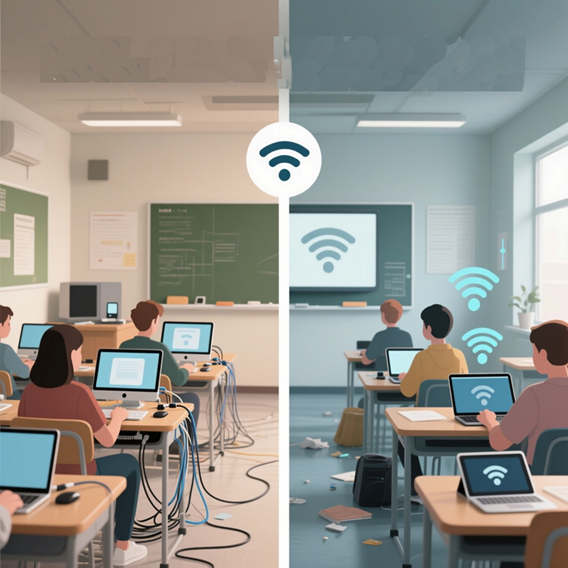
Schools report 15–25% reduction in network support tickets post-implementation.
Policy 2: Digital Hygiene & Device Management
- Airplane mode during classes – Devices emit less radiation when not searching for signals
- Device-free zones – Libraries, meditation rooms, primary classrooms (ages 5–8)
- Distance protocol – Students taught to keep phones ≥15 cm from head during calls
- Charging stations outside bedrooms/study areas – Reduces overnight exposure
Bonus: Improved focus, reduced screen distraction, better sleep quality (parents report significant behavioral improvements).
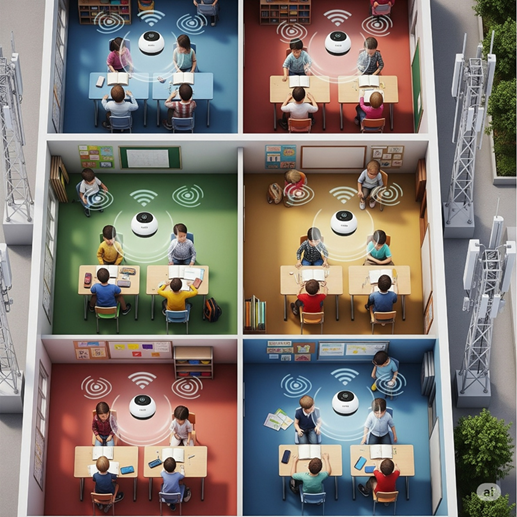

Over 100,000 students across India’s schools have attended LiveSAFE digital safety programs. This demonstrated commitment to child health becomes a powerful admissions narrative.
Children with Autism Spectrum Disorders exhibit heightened sensory reactivity and neurophysiological vulnerability to environmental stressors. EMR exposure exacerbates:
- Sleep irregularities and circadian rhythm disruption
- Sensory overload and hyperacusis (sound sensitivity)
- Anxiety and executive function challenges
- Proprioceptive and vestibular dysregulation

Dedicated EMR-Free Sensory Rooms:
Complete electromagnetic shielding (Faraday cage principle using LiveSAFE nano-mesh)
- Soft, predictable lighting (no fluorescents; warm LED or natural light preferred)
- Nature views and biophilic elements
- Acoustic treatment (reduce overstimulation)
- Weighted surfaces, proprioceptive tools
- Zero wireless devices (complete wired infrastructure)
Autism-Friendly Features + EMR Reduction:
- Predictable spatial layouts with clear visual boundaries
- Low-stimulation sensory input = lower biological stress load
- Improved focus and emotional regulation = better learning outcomes
Design differentiation: Schools with certified ASD-friendly, low-EMR classrooms attract specialty admissions, justify premium fees, and serve an underserved market segment.
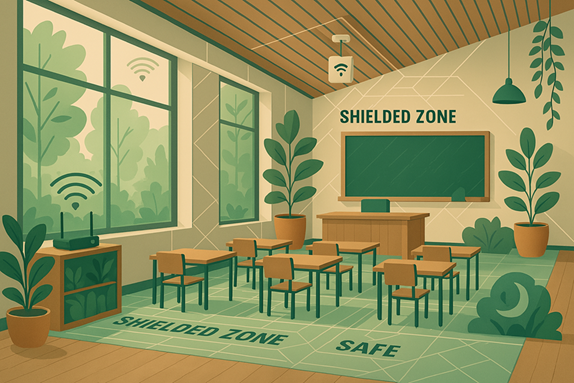
Case study: LiveSAFE-partnered schools report 30–40% improvement in ASD student academic engagement and behavioral stability post-EMR management.
Why Every School Needs an Audit
Before investing in shielding or retrofits, you need data-driven insights:
A professional EMR audit identifies:
- External RF hotspots – Tower interference, nearby cell sites
- Internal Wi-Fi saturation – Classroom zones with excessive signal density
- Electrical field mapping – “Dirty electricity” and wiring-related EM fields
- Cumulative exposure zones – Classrooms where children face 24/7 multi-source exposure
- Retrofitting priorities – Targeted interventions for maximum impact
What Schools Discover
Most audits reveal:
- 2–3 “hot zones” (often offices, WiFi router clusters, near windows/towers)
- Cumulative exposure significantly exceeds current WHO ICNIRP guidelines in 40–60% of spaces
- Retrofit costs 50–70% lower than anticipated (focused interventions work better than blanket solutions)
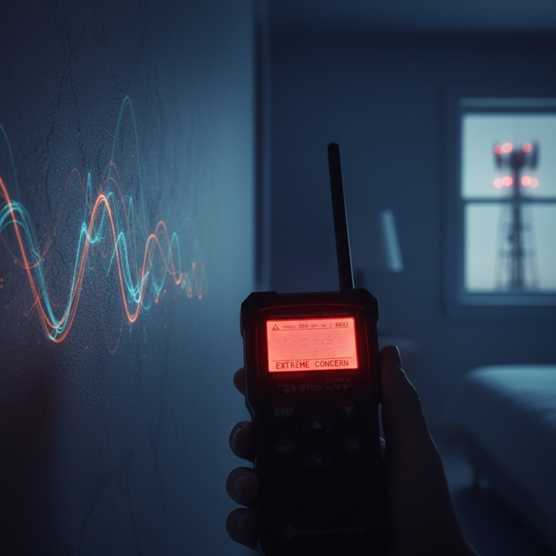
Why Partner with LiveSAFE: End-to-End EMR-Safe School Certification
Phase 2: Implementation (Weeks 3–12)
- Shielding material selection & integration (coatings, mesh, films)
- Electrical system optimization
- Wi-Fi management & wired-first infrastructure planning
- Staff training on EMR reduction protocols
Phase 3: Certification & Ongoing Monitoring (Ongoing)
- Post-implementation EMR re-assessment
- “EMR-Safe Campus by LiveSAFE” certification (marketing asset + WELL/LEED credits)
- Annual monitoring & updates
- Student/parent digital safety education programs
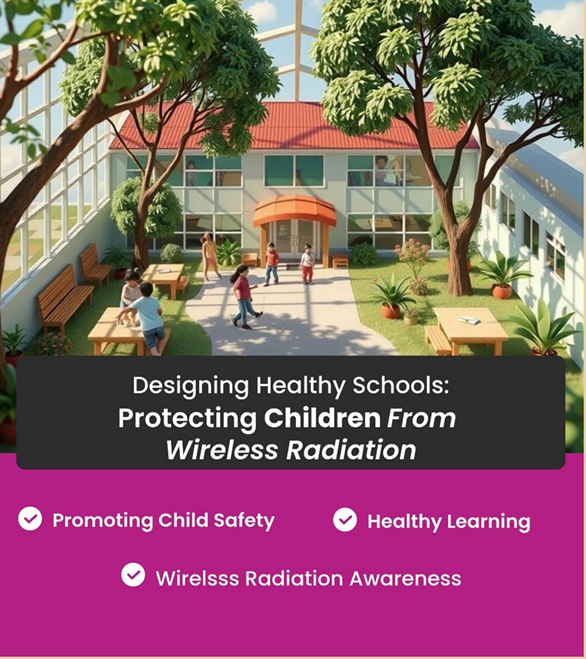
School clients include: Montessori networks, Rotary International schools, Canadian preschool franchises, premium CBSE/IB schools, schools for children with special needs.
For New Construction (Optimal Impact)
Design Phase:
- Include EMR audit requirements in architectural brief
- Integrate LiveSAFE consultant into design team (early = low cost, high impact)
- Plan electrical layout to minimize “dirty electricity”
- Specify shielding materials in interior specifications
- Cost allocation: ₹5–₹25 / SqFt (0.3–1.5% of total construction budget)
Result: EMR-safe design with zero aesthetic compromise.
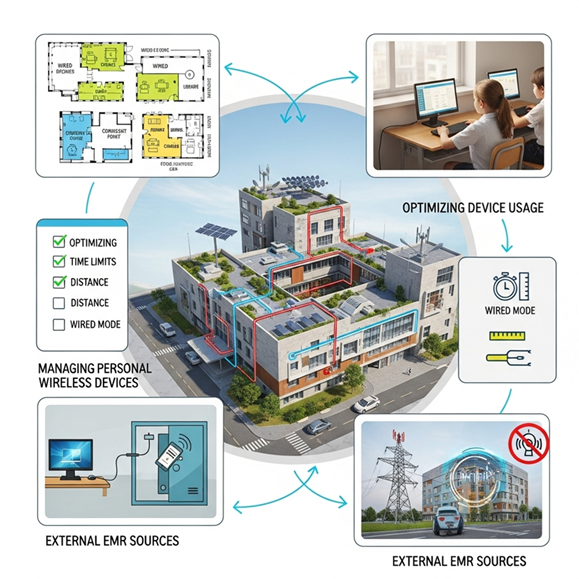
Year 1 – Quick Wins (₹0 – ₹15 Lakhs):
- Professional EMR audit
- Implement wired-first policy (hardwire projectors, boards)
- Launch digital hygiene + device-free zones
- Teacher/parent education program
Year 2 – Strategic Shielding (₹15–₹50 Lakhs):
- Apply EMR-reducing coatings to high-exposure classrooms (estimate: 20–30% of school area)
- Install window films (entry points)
- ASD-friendly sensory room with complete shielding
Year 3 – Optimization & Certification:
- Full building shielding as budget allows
- Re-audit & certification
- “EMR-Safe Campus” marketing campaign
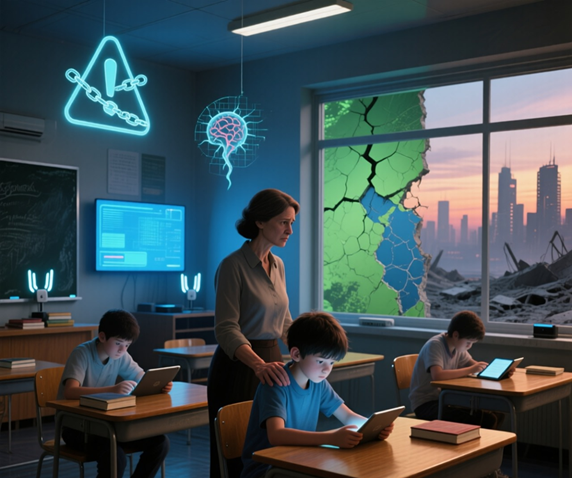
ROI Benchmark: Schools report 15–25% improvement in student focus/attention within 3 months of operational policy changes; health complaints (headaches, sleep issues) drop 40–60% post-environmental modifications.
Q1: Is EMR really a proven health risk, or is this overstated?
The WHO’s International Agency for Research on Cancer (IARC) classified radiofrequency electromagnetic fields as a Group 2B “possible human carcinogen” in 2011. Over 1,000 peer-reviewed studies document neurological, cognitive, and cellular impacts in children. Current safety standards (like ICNIRP guidelines) are based on adult thermal effects, not developmental or non-thermal impacts in children. Bottom line: The precautionary principle suggests schools should act now while research continues.
Q2: What’s the difference between ELF-EMF and RF-EMF?
- ELF-EMF (Extremely Low Frequency): 3–3,000 Hz; from power lines, wiring, appliances
- RF-EMF (Radiofrequency): 30 kHz–300 GHz; from Wi-Fi, mobile phones, cell towers, 5G
Both can impact health. Schools should manage both. LiveSAFE audits assess both sources.
Q3: If we adopt EMR safety measures, will it limit our school’s technology capabilities?
Absolutely not. Wired-first doesn’t mean tech-free. Ethernet + Wi-Fi hybrid approaches deliver faster, more reliable connectivity (in fact, wired = better performance). Schools like Montessori networks have adopted wired infrastructure and report improved tech outcomes with zero radiation concerns.
Q4: What does an EMR audit actually involve? Is it disruptive?
A professional audit involves:
- RF signal mapping (non-invasive; hand-held meters)
- Electrical field assessment
- Data logging over 24–48 hours
- Minimal classroom disruption (measurements happen during off-hours or non-teaching zones first)
Turnaround: 1–2 weeks for full report + recommendations.
Q5: How much does EMR-safe design actually cost?
For new construction: ₹5–₹25 / SqFt (0.3–1.5% of total building cost).
For retrofit: Phase-in from ₹0 (policy changes) to ₹20–₹50 Lakhs (phased shielding over 2–3 years).
Compare this to:
- Typical interior finishing: ₹100–₹300 / SqFt
- HVAC systems: ₹50–₹150 / SqFt
EMR-safe design is cost-competitive with standard school finishes and delivers lifetime health protection.
Q6: Will EMR-safe measures affect the aesthetics or feel of the school?
No. LiveSAFE coatings, mesh, and films are invisible to the occupant. They integrate into walls, ceilings, and windows without visible change. The result: 100% radiation safe; 100% design continuity.
Q7: What about ongoing maintenance or monitoring?
Low. Once shielding is installed, it’s passive and maintenance-free. LiveSAFE recommends annual EMR re-checks (quick, 1–2 days) to ensure continued effectiveness and assess any new RF sources (tower upgrades, new 5G deployment nearby).
Q8: Can we get WELL or LEED credit for EMR-safe design?
Yes. WELL v2 includes electromagnetic field management in its Health + Wellbeing framework. LEED recognizes low-EMF design under Innovation categories. LiveSAFE’s certification pathway can help schools document and claim these credits.
Q9: How do ASD-friendly low-EMR spaces differ from standard classrooms?
ASD-optimized low-EMR rooms feature:
- Complete electromagnetic shielding (Faraday cage)
- Soft, predictable lighting (no fluorescents)
- Minimal sensory stimulation
- Nature views and proprioceptive tools
- Wired-only infrastructure (zero wireless)
Schools report 30–40% improvement in ASD student focus and emotional regulation in these spaces.
Q10: What if we’re mid-construction or already built?
No problem. LiveSAFE offers retrofit solutions:
- Coating solutions for existing walls/ceilings
- Window films for glass surfaces
- Mesh integration into existing spaces (creative partitioning, roller systems)
- Electrical optimization for new equipment placement
Early retrofit planning saves 50–70% in costs vs. reactive measures.
Within 5 years, schools without documented EMR management will face:
- Parent inquiry pressure (“Does your school shield against radiation?”)
- Regulatory tightening (countries like France have stricter child EMR limits; India will follow)
- Accreditation requirements (WELL, LEED, international school standards)
- Liability exposure (class-action frameworks increasingly address invisible hazards)
Schools that act now become category leaders. Those that wait risk retrofitting costs, enrollment challenges, and regulatory scramble.
If you’re an architect or designer planning a new campus or renovation:
📞 Schedule a free EMR audit consultation — LiveSAFE will assess your site and design strategy with zero obligation.
💡 Integrate EMR-safe principles into your CAD/BIM workflow — Design excellence + health protection = market differentiation.
If you’re a school administrator or founder:
📞 Request an EMR exposure audit — Get data-driven insights into your school’s current status and retrofitting roadmap.
✅ Launch a digital hygiene policy — Start today; zero cost; immediate benefits in focus and behavior.
Contact LiveSAFE:
📞 +91 9916 911 911
🌐 www.livesafe.in
📧 contact@livesafe.in
- World Health Organization, International Agency for Research on Cancer (2011). Radiofrequency electromagnetic fields classification as a Group 2B “possible human carcinogen.”
- Singh, N. P., & Lai, H. (2004). Activation of microglia by radiofrequency radiation. Pathophysiology, 11(1), 3–9.
- Hardell, L., & Carlberg, M. (2015). Mobile phones, cordless phones and the risk of glioma – Analysis of pooled case-control studies in Sweden 1997–2003 and 2007–2009. Pathophysiology, 22(1), 1–13.
- Khurana, V. G., et al. (2010). Epidemiological evidence on mobile phones and tumor risk: A review. Journal of Environmental Health Sciences & Engineering, 7(2), 91–101.
- Fragopoulou, A., et al. (2010). Scientific panel on electromagnetic field health risks: Consensus points, recommendations, and rationales. Reviews on Environmental Health, 24(2), 127–157.
- Österberg, U., et al. (2013). Occupational exposure to radiofrequency electromagnetic fields in health care facilities. Journal of Occupational and Environmental Medicine, 55(11), 1342–1347.

LiveSAFE
Nanorama Technologies Pvt Ltd
447/A, 9th Cross,
2nd Phase, JP Nagar,
Bangalore 560078, India
447/A, 9th Cross,
2nd Phase, JP Nagar,
Bangalore 560078, India
- +91 9916 911 911
- contact@livesafe.in

 contact@livesafe.in

