
Continuous Glucose Monitor (CGM)& Wireless EMF Radiation: Health Risks, Science & Safest CGMs in India (2025)
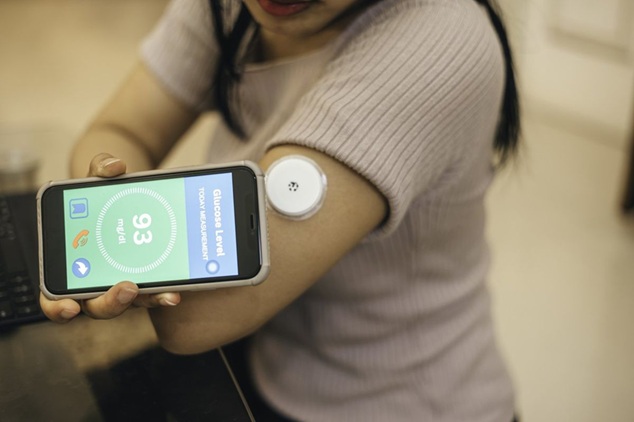
If you use a Continuous Glucose Monitor (CGM) to track your blood sugar, you might wonder whether its wireless signals could affect your health.
Here’s what current research says—and how to minimize your risk.
Key Takeaways: Quick Summary
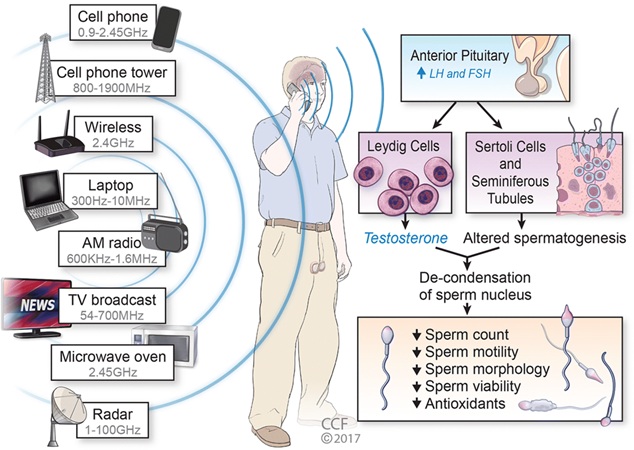
- EMR and Blood Sugar Connection: Animal studies show cell phone electromagnetic field (EMF) exposure increases blood sugar and insulin resistance.
- CGMs in India: All major CGMs use wireless communication (Bluetooth or NFC), transmitting data from wearable sensors to mobile apps.
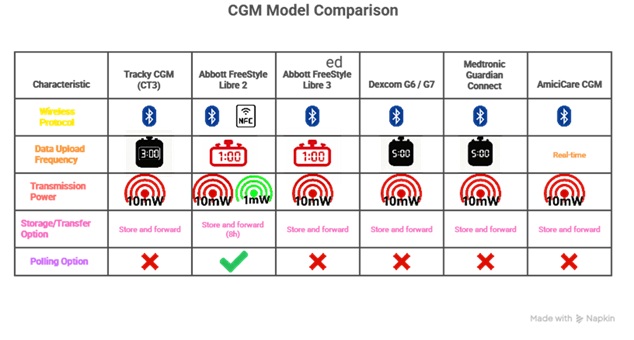
- Transmission Frequency & Power: Most CGMs transmit glucose data every 1–5 minutes, using Bluetooth Low Energy (~10 mW) or NFC (<1 mW).
- No Direct CGM-Blood Sugar EMR Studies: No current human studies directly link CGM wireless EMR to glucose spikes. Studies which had started were stopped due to lack of funding.
- Manual Polling Option: Only Abbott FreeStyle Libre 2 offers a manual NFC scanning mode (minimal EMR) in India.
- Smart Recommendations: Diabetics can reduce EMR exposure by selecting CGMs with polling/storage features, and strategic device placement.
- Transmission Strength: CGMs emit 100–200× less radiation than cell phones, but operate 24/7 in contact with skin, which could be potentially very dangerous!
- Expert Advice:
The proven benefits of CGMs (better sugar control, reduced risks) outweigh the theoretical EMR risks—but prudent choices and practices minimize exposure. If you are a person not dependent on real time CGM data, choose the Polling option CGM, it will reduce your EM radiation exposure significantly.
LiveSAFE can ensure your home or office is safer for you by assessing your Wireless EM Radiation exposure from your CGM and other sources which can affect you. A LiveSAFE Wireless EM Radiation audit can assist you with the best strategy to stay safe.
Contents
- How EMR Affects Blood Sugar Levels: Scientific Evidence.
- How Continuous Glucose Monitor (CGM) Work—Wireless Tech & Transmission Patterns.
- Storage & Manual Polling for Continuous Glucose Monitor (CGM): The Safer Option.
- EMR Management Strategy.
- Features by Continuous Glucose Monitor (CGM) Model (India Availability).
- Expert Recommendations: For Diabetics Using CGMs.
- Blood Sugar Management: What Matters Most
- Research Needs: What’s Missing.
- Conclusion.
- About www.LiveSafe.in.
- Frequently Asked Questions (FAQ).
How EMR Affects Blood Sugar Levels: Scientific Evidence
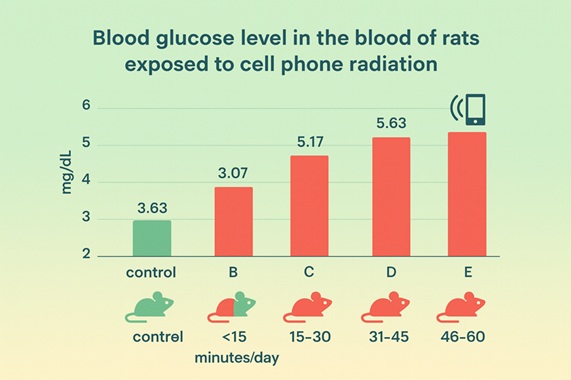
Recent studies have clearly demonstrated that exposure to electromagnetic radiation (EMR) from common wireless devices—such as mobile phones, Wi-Fi routers, Bluetooth gadgets, and wearable health monitors—can significantly impact blood sugar regulation. Notably, a published experimental study found that even moderate daily EMR exposure from cell phones led to elevated blood sugar levels and increased insulin resistance in animal models, underscoring the importance of understanding the effects of wireless radiation on our health. (Study available here)
In today’s connected world, we encounter wireless radiation from multiple sources: smartphones, tablets, laptops, wireless earphones, smart home devices, and medical wearables like continuous glucose monitors (CGMs). According to ICNIRP (International Commission on Non-Ionizing Radiation Protection) standards, cumulative exposure to all radio frequencies must be evaluated to ensure a safe environment—especially for vulnerable groups such as diabetics. By identifying every source of wireless radiation in your daily environment and assessing total exposure, you can take practical steps to minimize health risks and design a safer living space.
Understanding and managing your EMR exposure is not just about one device: it’s about the sum total of all wireless technologies you use every day. LiveSAFE works with you to assess your exposure to all sources of Wireless EMR/ EMF in your environment with calibrated meters and spectrum analyzers to help assess your exposure as per ICNIRP standards.
How Continuous Glucose Monitor (CGM) Work—Wireless Tech & Transmission Patterns
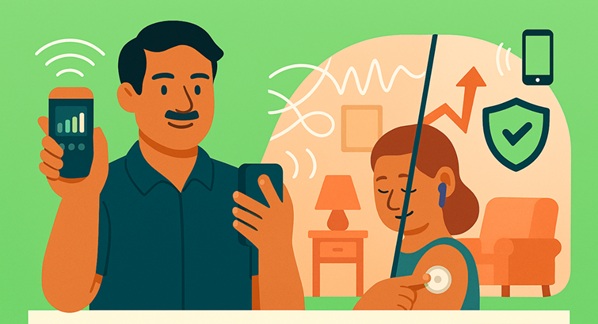
Continuous Glucose Monitors (CGMs) revolutionize diabetes care with real-time, automatic readings every few minutes:
- Sensor: Inserted below the skin, measuring interstitial glucose levels.
- Transmitter: Sends readings wirelessly (Bluetooth/NFC) to app or receiver.
- App/Display: Shows live readings, trends, and alerts.
All CGMs use wireless communication, but in two main modes:
- Bluetooth Low Energy (BLE): Most transmit every 1–5 mins, using short (<10 mW) radio bursts.
- NFC: Only active during user-initiated scans (Abbott Libre 2), far lower power (<1 mW) and duration.
Storage & Manual Polling for Continuous Glucose Monitor (CGM): The Safer Option
Abbott FreeStyle Libre 2 is the only CGM in India with a manual NFC option. Here’s why this matters:
- Sensor stores up to 8 hours of data.
- Data is transferred only when scanned (user-initiated).
- Minimal EMR (seconds per day, <1 mW).
- Drastically less EMR exposure than continuous Bluetooth.
All other CGMs sync automatically via Bluetooth, transmitting data every few minutes, with no user control over timing.
EMR Exposure from Continuous Glucose Monitor (CGM): Power & Frequency
- Bluetooth LE:4 GHz, ~10 mW, auto transmission every few min.
- NFC:56 MHz, <1 mW, user-triggered scanning takes 1–2 sec.
- Cell Phone EMR: 2,000 mW (2W) on calls, far higher but for short periods.
- CGMs transmit 100–200× weaker signals but are in constant contact with the skin, 24/7.
EMR Management Strategy
- Find out what your exposure is at where you spend more time in a day (Ex. Living room, Bedroom, Office Workstation)
- LiveSAFE provides accurate assessment of your EM Radiation exposure from all Wireless and Electricity (ELF) Sources, and let’s you know which areas are safe and which areas need to avoided.
- Knowing your exposure to Wireless EM Radiation may help you better manage your diabetes by preventing insulin spikes.
Features by Continuous Glucose Monitor (CGM) Model (India Availability)
- Tracky CGM: Bluetooth, storage/forward, no polling, rated waterproof, affordable.
- Abbott Libre 2: Bluetooth + NFC, optional manual polling, best choice to minimize EMR.
- Dexcom G6/G7: Auto Bluetooth only, advanced features (alerts, sharing), high accuracy.
- Guardian Connect: Auto Bluetooth, insulin pump compatibility, AI support.
- AmiciCare: Bluetooth, real-time, waterproof, budget model.
Expert Recommendations: For Diabetics Using CGMs
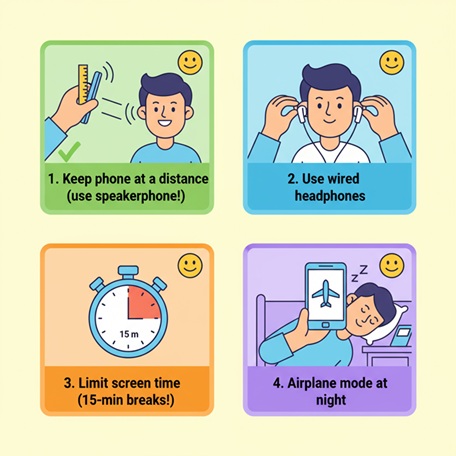
- Best Practice: Use Abbott FreeStyle Libre 2 in NFC manual scan mode for lowest EMR.
- Second-Best: For continuous Bluetooth CGMs, use LiveSAFE assessment to determine optimum distance between Phone and CGM; keep receiver away from vital organs.
- Consider airplane mode with Bluetooth re-enabled to cut out cell phone EMR (keeps CGM active).
- For nighttime, keep mobile device on bedside (not under pillow), charge overnight to avoid frequent reconnection EMR bursts.
- Review CGM reports regularly with clinician—optimize settings for fewer transmissions if possible.
- Find out more at https://idf.org/
Blood Sugar Management: What Matters Most
- Primary Goal: Stable glucose levels and prevention of spikes/crashes.
- CGMs Save Lives: Proven to improve diabetes control and reduce risk of complications.
- EMR Minimization: Wise choice to reduce cumulative theoretical risk by assessing exposure in regularly used areas—opt for devices and settings allowing manual transfer.
- Choose safety: Get your home/office audited by LiveSAFE professionals, know the safest place to stay longer durations.
- Balance: The dangers of uncontrolled blood sugar are immediate; theoretical EMR risks require further study—but prudent habits maximize safety.
Research Needs: What’s Missing
- Direct, peer-reviewed studies on CGM EMR exposure and impacts on blood sugar are urgently needed.
- Comparative research between continuous, intermittent, and manual-polling CGM modes.
- Device manufacturers should provide full specs and independent safety studies.
Conclusion
While continuous glucose monitors (CGMs) deliver proven benefits for diabetes management, clinical and experimental studies now highlight the critical importance of managing your overall exposure to electromagnetic radiation (EMR) from every wireless device in your daily environment. Beyond smartphones and Wi-Fi routers, wearables, medical sensors, and smart home devices all contribute to your cumulative EMR load. That’s why it’s essential to control wireless transmission wherever possible—choosing options like the Abbott FreeStyle Libre 2 NFC mode—and practice smart device placement with every gadget you use.
The most effective way to protect your health is to understand and reduce EMR from all sources, not just individual devices. ICNIRP standards emphasize evaluating cumulative radiofrequency exposure for a truly safe environment. For peace of mind and optimal health, consider a professional EM radiation audit from LiveSafe. Our audit identifies all wireless emitters in your living and working spaces, tests cumulative EMR exposure, and provides actionable recommendations to design a safer, healthier environment—especially important for diabetics and other vulnerable individuals.
Remember: Diabetes control comes first, but managing wireless radiation exposure is essential for long-term well-being. Start by knowing your risks—schedule a LiveSafe EM Radiation Audit and make informed safety choices for you and your family.
About www.LiveSafe.in
LiveSafe.in delivers evidence-based advice, expert commentary, and practical safety strategies for managing EMR risks in everyday life—including smart optimization of medical devices.
LiveSAFE is a wireless radiation management company dedicated to creating safer environments in homes, offices, and schools. Using calibrated EMR meters, we assess electromagnetic radiation exposure and provide patented shielding solutions—coatings, meshes, and films—that reduce harmful exposure while preserving aesthetics and connectivity. We ensure compliance with ICNIRP and Building Biology Institute standards for safer, healthier spaces…guaranteed!
Written by Neehar S Rao, EMF Safety Evangelist and Technical Director at LiveSafe
Disclaimer: This article is for educational purposes; consult your healthcare provider for personalized diabetes management.
Frequently Asked Questions (FAQ) About Continuous Glucose Monitors (CGMs) and Wireless Radiation
- Do CGMs increase my exposure to electromagnetic radiation (EMR)?
Most CGMs use Bluetooth or NFC (near-field communication) to send data to your phone or reader. While this does add a small amount of EMR to your environment, the strength is much lower than what you get from your mobile phone or Wi-Fi router. The real concern is your total exposure from all wireless devices in your daily life, according to ICNIRP guidelines.
- Which CGM has the least radiation exposure?
The Abbott FreeStyle Libre 2, when used in scan (NFC) mode only, has the lowest EMR exposure because it only transmits data when you scan it—just a couple of seconds per scan, at very low power. Continuous Bluetooth models send signals every few minutes, 24/7.
- Do CGMs increase my exposure to electromagnetic radiation (EMR)?
Most CGMs use Bluetooth or NFC (near-field communication) to send data to your phone or reader. While this does add a small amount of EMR to your environment, the strength is much lower than what you get from your mobile phone or Wi-Fi router. The real concern is your total exposure from all wireless devices in your daily life, according to ICNIRP guidelines.
- Which CGM has the least radiation exposure?
The Abbott FreeStyle Libre 2, when used in scan (NFC) mode only, has the lowest EMR exposure because it only transmits data when you scan it—just a couple of seconds per scan, at very low power. Continuous Bluetooth models send signals every few minutes, 24/7.
- Can EMR from CGMs affect blood sugar or insulin levels?
Animal studies show a link between strong EMR and higher blood sugar and insulin resistance. There are no human studies proving CGMs cause this, but these devices use much lower power than mobile phones. Still, it’s smart to minimize exposure by choosing the right device and settings.
- Is Bluetooth from CGMs harmful to my health?
Bluetooth Low Energy (BLE)—used by most CGMs—works at low power, much less than phone calls or Wi-Fi. Major health organizations and device regulators say BLE is generally safe, but if you want to play it safe, choose a CGM that lets you control when it transmits.
- How can I reduce EMR exposure while using a CGM?
Pick a CGM with a manual scan option (like Abbott Libre 2).
Keep your phone away from your body when not in use.
Use airplane mode with Bluetooth enabled when possible.
Reduce the number of wireless devices near you, especially at night.
Get a professional EMR audit of your home to identify and lower overall exposure.
- Are CGMs safe for long-term use?
CGMs are approved by health authorities worldwide for daily and long-term diabetes management, and most people use them safely for many years. The key is to balance the huge benefits in blood sugar control with steps to keep EMR exposure as low as possible.
- What are the main sources of EMR in my home?
Everyday sources include smartphones, Wi-Fi routers, tablets, laptops, smartwatches, wireless headphones, and wireless medical devices like CGMs. The total, or cumulative, exposure matters most for your safety.
- Should I worry about wireless radiation from other devices too?
Yes—especially if you have lots of wireless gadgets in your home. According to international safety guidelines (ICNIRP), it’s a good idea to look at your total EMR exposure from all sources, not just medical devices.
- What is a LiveSafe EM Radiation Audit and why should I get one?
A LiveSafe EM Radiation Audit is a professional assessment that checks all wireless radiation sources in your home or office. The audit measures real EMR levels, identifies hidden risks, and gives you a plan to lower exposure, creating a healthier environment for you and your family.
- Should children or teens with diabetes use CGMs?
CGMs are a game-changer for young people with diabetes because they make blood sugar tracking easy and painless. For kids and teens, using CGMs with scan-only features or limiting total wireless gadgets in their bedrooms is a smart way to manage health and safety.
Still have questions? Leave a comment below or contact LiveSafe for personalized advice about safe diabetes management in a wireless world!